
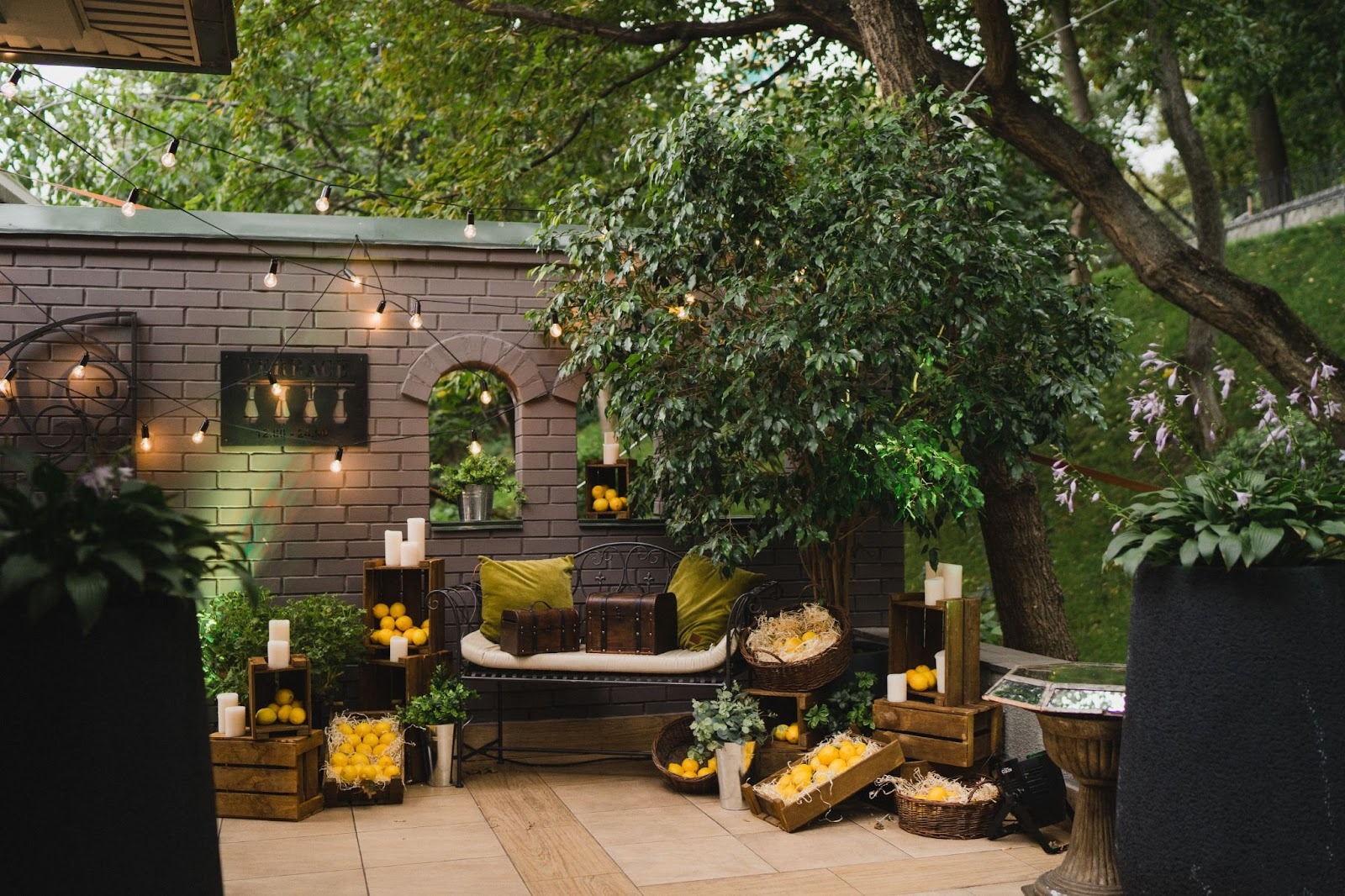
Homeowners want outdoor spaces that feel personal and purposeful. Outdoor patio ideas in 2026 reflect how families cook, relax, and connect at home. Patios now serve as daily living areas rather than occasional gathering spots. Design trends focus on comfort, durability, and smarter use of space. Homeowners who plan thoughtfully can create a backyard setting that supports both lifestyle and long-term property value.
Outdoor Patio Ideas Shaping 2026 Living
Backyards are no longer secondary spaces reserved for occasional use. Homeowners now expect patios to function as structured, comfortable, and adaptable living areas. Design decisions in 2026 reflect shifts in lifestyle, technology, and long-term planning. The following strategies highlight how thoughtful upgrades can turn an ordinary patio into a purposeful extension of the home.
Design Outdoor Patio Layouts That Work Smarter
Smart patio layouts organize space into clear, usable zones that support daily living. Homeowners benefit when each section serves a defined purpose without crowding the yard. Designers often recommend mapping traffic flow before placing furniture or fixtures. This layout strategy helps maximize usable square footage while maintaining comfort.
Structure Patio Zones Around Daily Living
Design patio zones based on how your household actually uses the space. Dining, lounging, and quiet corners should each serve a defined purpose. Strategic placement reduces congestion and improves flow between areas. This layout method supports both everyday routines and weekend gatherings. Clear zoning also increases perceived space in smaller yards. Homeowners gain efficiency without expanding their footprint.
Create Visual Continuity from Indoors Out
A strong patio design mirrors the interior aesthetic, creating a cohesive experience. Matching materials and coordinated finishes strengthen the connection. Large glass openings visually extend the living area. This transition strategy increases light and spatial flow. Buyers often respond positively to unified design language. Homes feel larger and more intentional through alignment.
Plan Layouts That Adapt Over Time
Flexible layouts accommodate changing needs without structural changes. Modular seating and movable elements support seasonal shifts. Strategic spacing prevents overcrowding during events. This adaptable planning approach extends usability across years. Homeowners avoid costly redesigns as needs evolve. The patio remains relevant instead of restrictive.
Build Sustainable Outdoor Patio Spaces
Sustainable patio design reduces environmental impact while lowering long-term maintenance costs. Homeowners increasingly prioritize materials and landscaping that conserve resources. Industry reports from the National Association of Home Builders highlight growing demand for eco-friendly exterior upgrades. This sustainability trend influences decking, paving, and planting choices across residential projects.
Select Materials Built for Longevity
Durable materials reduce maintenance and replacement cycles. Composite decking is resistant to moisture and fading. Natural stone provides long-term structural stability. This material strategy balances sustainability with aesthetics. Fewer repairs translate to lower lifetime costs. Responsible choices support both the environment and property value.
Improve Drainage With Permeable Surfaces
Permeable paving manages stormwater more effectively than solid slabs. Water filters naturally into the soil beneath. This drainage system protects nearby landscaping and foundations. Proper runoff control prevents long-term structural issues. Modern permeable options complement contemporary designs. Homeowners gain durability without compromising style.
Design Landscaping That Conserves Resources
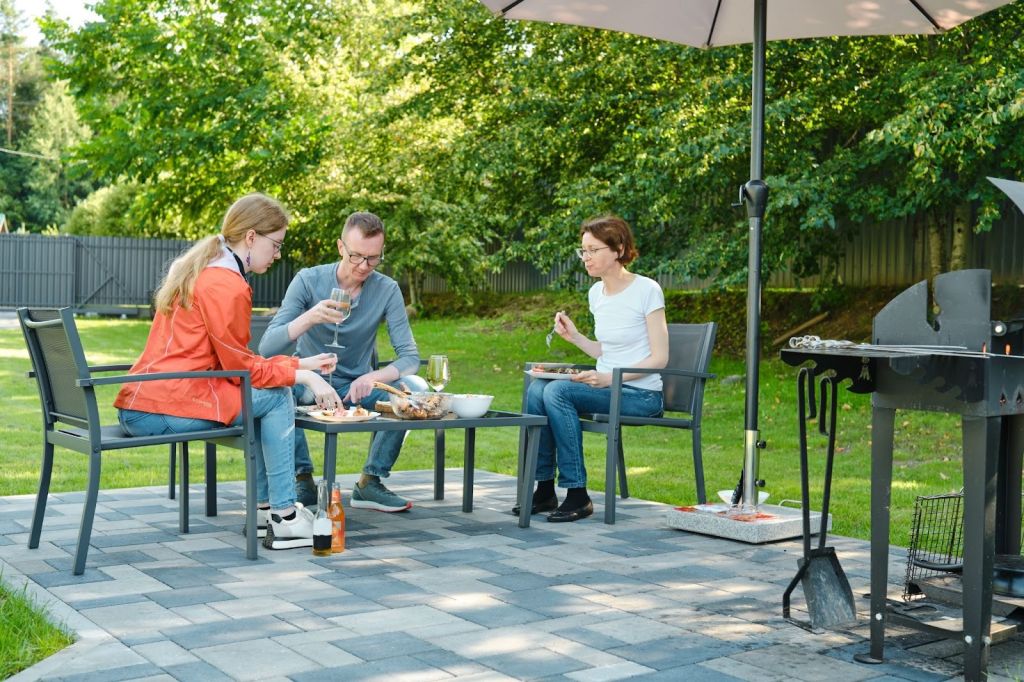
Native plants reduce water use and ongoing care requirements. Smart irrigation systems deliver moisture precisely where needed. This conservation-focused approach lowers utility expenses. Dense planting also supports biodiversity and natural cooling. Sustainable landscaping enhances both beauty and efficiency. Patios become environmentally responsible extensions of the home.
Plan Outdoor Patios for Long-Term Living
Aging-in-place patio design focuses on long-term safety and accessibility. Homeowners who plan early reduce costly renovations later. Outdoor spaces should remain usable as mobility needs change. This forward-thinking design strategy supports independence and comfort over time.
Design Step-Free and Stable Surfaces
Flush transitions reduce trip hazards at entry points. Slip-resistant finishes improve safety during wet conditions. Textured materials increase traction. This surface planning protects all age groups. Stable flooring supports mobility aids when necessary. Safety integrates seamlessly into design.
Expand Walkways for Accessibility
Wider pathways improve circulation between zones. Clear sightlines reduce confusion in low light. Rounded furniture edges enhance safety. This spatial planning approach accommodates changing mobility needs. Generous spacing prevents overcrowding. The patio remains functional across life stages.
Optimize Lighting and Supportive Seating
Layered lighting improves depth perception at night. Chairs with armrests assist with standing. Seat height should promote natural posture. This comfort-focused planning reduces physical strain. Thoughtful details increase daily usability. Patios remain welcoming for every generation.
Choose Patio Furniture That Lasts and Leads
Durable patio furniture combines weather resistance with modern design. Homeowners should prioritize materials that withstand sun, rain, and temperature changes. Outdoor living trends in 2026 favor long-lasting investments over disposable seasonal sets. This quality-first mindset reduces replacement costs and supports consistent style.
Prioritize Structure Before Style
Furniture durability should guide purchasing decisions. Powder-coated frames resist corrosion in a wide range of climates. Teak and treated hardwood withstand moisture exposure. This structural integrity prevents premature wear. Quality construction preserves visual appeal over time. Homeowners benefit from fewer replacements and stronger long-term value.
Integrate Built-In Seating Solutions
Built-in seating defines patio edges and maximizes space. Integrated storage reduces clutter and protects accessories. This permanent design element adds architectural cohesion. Designers often use built-ins to anchor lounge areas. Structured seating improves traffic flow across zones. The patio feels planned rather than pieced together.
Balance Statement Pieces With Function
Accent elements should contribute both style and utility. Fire tables create gathering points and warmth. Sculptural planters can provide subtle privacy. This balanced design prevents visual overload. Purpose-driven features strengthen overall cohesion. Homeowners achieve refinement without excess.
Create Outdoor Kitchens That Bring People Together
Outdoor kitchens expand the functionality of backyard patios. Homeowners value cooking spaces that keep them engaged during gatherings. According to recent home improvement surveys, outdoor cooking ranks among the top exterior upgrades. This demand reflects changing lifestyle habits centered around at-home entertainment.
Design Compact Kitchens With Purpose
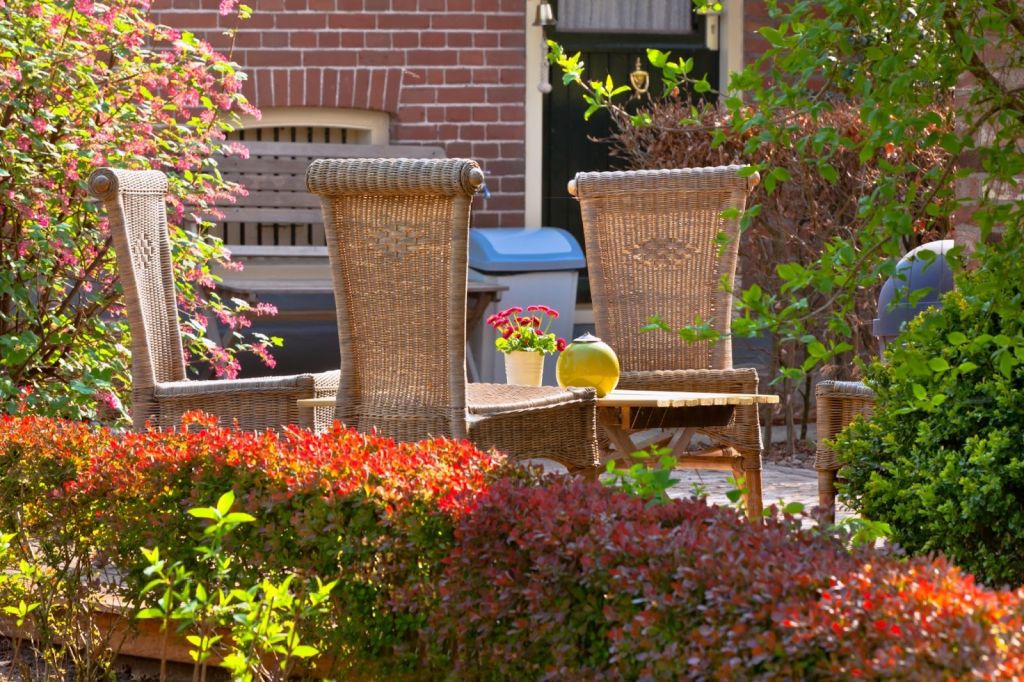
Outdoor kitchens should reflect actual cooking habits. A grill, prep counter, and storage often meet daily needs. Durable countertops resist weather exposure year-round. This focused layout avoids unnecessary bulk. Efficient design supports interaction during meals. Cooking remains central without isolating the host.
Incorporate Signature Culinary Features
Pizza ovens and smokers add experiential value. These elements create conversation and engagement. Proper placement protects surrounding materials. This specialty upgrade elevates entertainment potential. Guests naturally gather around active cooking zones. Patios serve as social anchors for the home.
Refine the Outdoor Dining Experience
Dining areas benefit from shade and layered lighting. Adjustable coverings manage sunlight effectively. Comfortable seating encourages longer gatherings. This thoughtful planning improves both function and atmosphere. Strategic lighting enhances evening visibility. Meals feel intentional rather than improvised.
Integrate Smart Features Into Outdoor Patios
Smart patio technology integrates lighting, climate, and entertainment systems for convenience. Homeowners increasingly connect outdoor features to existing smart home platforms. Industry data from home automation providers shows steady growth in exterior system installations. This technology integration enhances usability without compromising design aesthetics.
Control Lighting with Precision
Smart lighting systems allow remote brightness adjustments. Timers help regulate energy consumption. Pathway illumination improves nighttime safety. This technology integration simplifies outdoor management. Coordinated lighting enhances architectural details. Homeowners gain efficiency and control simultaneously.
Extend Seasonal Use With Climate Solutions
Infrared heaters add warmth during cooler evenings. Ceiling fans improve airflow in warmer months. Misting systems lower the ambient temperature in dry regions. This climate adaptability increases patio usability. Smart controls allow quick adjustments. Outdoor living becomes more consistent year-round.
Deliver Entertainment Without Clutter
Integrated speakers provide balanced sound distribution. Concealed wiring preserves clean design lines. Outdoor-rated screens support shared viewing experiences. This installation approach protects equipment longevity. Professional placement improves acoustic clarity. Technology enhances experience without dominating aesthetics.
Improve Outdoor Patio Comfort With Sound Design
Outdoor patio acoustics shape how comfortable and private a space feels. Hard surfaces such as concrete and stone can amplify echoes and unwanted noise. Homeowners often overlook sound control until conversations feel strained. This acoustic planning approach improves relaxation, entertainment quality, and neighborly privacy.
Control Sound Reflection Through Material Choices
Sound comfort begins with understanding how patio materials affect noise levels. Hard surfaces such as concrete and stone reflect sound, creating an echo during gatherings. Introducing soft textures, such as outdoor rugs, cushions, and upholstered seating, absorbs excess sound. This material strategy improves conversation clarity without structural changes. Balanced surface selection reduces harsh sound bounce across open areas.
Use Landscaping to Reduce External Noise
Strategic landscaping acts as a natural sound buffer. Dense hedges and layered shrubs help block street and neighborhood noise. Trees with fuller foliage diffuse sound more effectively than those with sparse foliage. This planting approach improves privacy while enhancing visual appeal. Water features can also generate consistent ambient sound that masks distractions. Outdoor spaces feel calmer and more intentional with layered greenery.
Position Speakers and Features Strategically
Audio equipment placement directly impacts sound quality and neighborhood impact. Speakers positioned closer to the seating require lower volume. This targeted placement prevents sound from traveling beyond property lines. Built-in systems under eaves or within planters offer balanced distribution. Similarly, fountains and fire features should be set back from reflective walls. Proper positioning keeps entertainment immersive without overwhelming the environment.
Add Shade and Privacy With Purposeful Design
Shade and privacy solutions improve comfort and create a sense of retreat. Homeowners often seek protection from the sun and from neighboring views. Designers combine structural elements with landscaping to achieve balance. This layered approach enhances usability without completely enclosing the patio.
Install Adjustable Pergola Systems
Modern pergolas provide structured yet flexible shade. Motorized louvers adapt to shifting sunlight. Built-in lighting extends evening functionality. This architectural feature defines outdoor rooms. Durable frames require minimal maintenance. Shade becomes a strategic asset rather than an afterthought.
Layer Privacy With Natural and Structural Elements
Decorative panels introduce texture and visual depth. Vertical gardens soften boundaries with greenery. Tall planters create subtle separation. This layered privacy strategy maintains airflow. Balanced screening improves comfort without enclosure. Patios feel intimate while remaining open.
Elevate Your Outdoor Patio for 2026
Outdoor patio ideas deliver lasting value when guided by thoughtful planning and skilled execution. A well-designed patio should reflect how you live today while remaining adaptable for years ahead. Strategic upgrades in layout, materials, comfort, and technology require more than inspiration; they require experienced builders who understand structure and detail. Partnering with professional builders helps turn smart concepts into durable outdoor spaces built with precision and long-term purpose.
Continue refining your vision with practical advice and strategic inspiration on the Behan Builders blog, where outdoor patio ideas meet craftsmanship and experience.